
custom food trucks, builT in oregon
Custom food truck and food trailer builders in Clackamas, Oregon, serving Portland, Seattle and clients in all 50 states.
visit the shop
sales@customfoodtrucksllc.com

01
food trucks & TRAILERS
02
service areas


A food truck generator has one job: keep every cooler, fan and light running through a full service without stalling when a compressor kicks on. Most trucks land between 4,000 and 10,000 running watts, but the right size depends on what is electric on your menu and what burns propane. Below is the wattage of common food truck equipment, three worked sizing examples, the difference between inverter, open-frame and built-in units, and the setup rules inspectors and event organizers check.
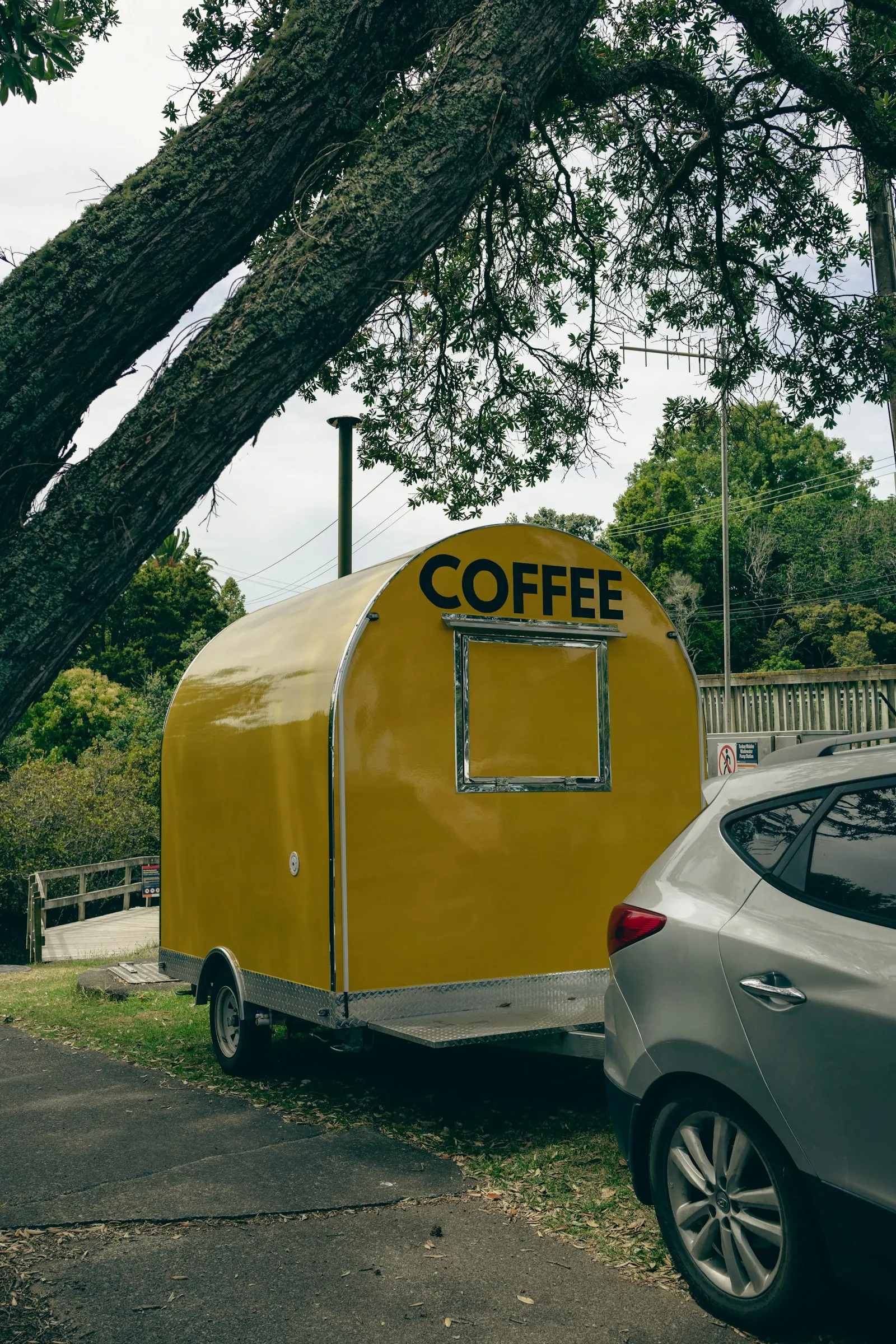
Start with what actually uses electricity. On most trucks the griddle, fryers, charbroiler and water heater run on propane, so the generator only carries refrigeration, the exhaust fan, the water pump, lighting, the POS system and any electric cooking or coffee equipment. That is why a burger truck that cooks on propane can run on a mid-size generator, while a coffee trailer with a large espresso machine or an all-electric kitchen needs far more.
Every appliance has two numbers. Running watts are what it draws once it is going. Starting watts are the short spike when a motor or compressor starts, and refrigerators, freezers, ice machines and air conditioners can pull two to three times their running watts for a moment. A generator that covers the running load but not that spike will bog down or trip every time the cooler cycles on during a rush.
If a nameplate only lists amps, multiply by the voltage: a refrigerator rated 5 amps at 120 volts uses about 600 watts. Equipment on 240-volt circuits, such as large espresso machines, electric fryers and some air conditioners, needs a generator with a 240-volt outlet, not just enough total watts. Our food truck design guide shows how the equipment list and the layout get planned together.
Refrigeration (runs all shift):
Commercial refrigerator: 600–800 W running, 1,200–2,000 W starting
Commercial freezer: 700–1,000 W running, 1,400–2,500 W starting
Ice maker: 300–700 W running, 600–1,200 W starting
Electric cooking and drinks (high draw while in use):
Electric griddle: 1,500–3,000 W
Electric fryer: 1,800–5,000 W
Induction cooktop: 1,500–3,500 W
Panini press: 1,000–1,800 W
Commercial microwave: 1,000–1,800 W
Espresso machine: 1,500–3,000 W for compact units, more for large multi-group machines
Coffee brewer: 800–1,500 W
Blender: 500–1,500 W
Air and water:
Exhaust hood fan: 300–600 W running, 600–900 W starting
Rooftop air conditioner (13,500 BTU): 1,500–2,000 W running, 2,800–3,500 W starting
Fresh water pump: 100–300 W

Small loads that add up:
LED interior lights: 20–100 W
Exterior menu and sign lights: 50–200 W
POS system: 50–150 W
Digital menu screen: 50–150 W
Tablets and phone chargers: 10–90 W each
These ranges come from generator manufacturer sizing charts. Use the nameplate on your own equipment whenever you have it, because real units vary.
The method is the same for every truck: add the running watts of everything that can be on at once, add the single largest starting surge on top, then leave about 20 percent headroom so the generator is not running flat out all shift. Coffee trailer: a 3,000 W espresso machine, a 500 W grinder, a 700 W under-counter refrigerator, a 1,000 W blender and 300 W of pump, lights and POS come to 5,500 W running. The refrigerator's start adds about 800 W, for 6,300 W at peak, so plan on a generator with roughly 7,500 to 8,000 running watts and a 240-volt outlet if the espresso machine needs one.
Taco truck that cooks on propane: two refrigerators (1,400 W), a freezer (850 W), the hood fan (500 W), an electric steam table (1,200 W), the water pump, lights and POS (400 W) and a 13,500 BTU air conditioner (1,700 W) total about 6,050 W running. The air conditioner's start adds about 1,500 W, so the peak is near 7,550 W and the right generator is about 9,000 to 10,000 W. Leave the air conditioner off the list and the same truck needs about 6,500 to 7,000 W.
All-electric kitchen: an induction cooktop, a 5,000 W electric fryer, two refrigerators, a freezer, the hood, an air conditioner and the small loads add up to about 13,350 W running and nearly 15,000 W at peak. With headroom that is around 18,000 W, which means a large built-in generator or 50-amp shore power, or moving some cooking to propane. That choice also changes what a food truck costs to build and to run, so it is worth settling before the equipment is ordered.
Inverter generators are the usual choice for trucks that serve at events. They are much quieter than open-frame models, their power is clean enough for POS systems, espresso machine controls and other electronics (inverters typically run under 3 percent harmonic distortion), and many can be paired to double their output. Open-frame generators cost less per watt and handle big surges well, but they are loud, and many event organizers will not allow them near the service line.
Built-in generators sit in a vented compartment or under the frame and are wired straight into the truck's panel, so there is nothing to lift out, chain up or run a cord from at every stop. They cost more up front, and the fuel matters: gasoline is easy to buy but has to be stored safely, propane can share the truck's supply but makes less power than the same generator on gasoline, and diesel is efficient for long days and pairs well with diesel step vans. On custom food trailers, a generator is often mounted on the tongue in a locked, vented box.

Generators are part of the fire inspection. Oregon's fire code rules for mobile food units require an approved carbon monoxide alarm where generators are used, prohibit running a generator in an enclosed area, and ban refueling while it runs. At events where the fire marshal applies NFPA 1, a portable generator has to sit at least 12 feet from the cooking operation, its exhaust has to stay 12 feet from openings, air intakes and exits, and it has to be fenced or guarded so the public cannot reach it. The fire code also calls for a portable fire extinguisher at each generator. Point the exhaust away from the service window and the trucks next to you.
Get the power into the truck the right way. Cords should be listed for outdoor use, heavy enough for the load (usually 10 or 12 gauge) and as short as practical. A properly wired truck feeds the generator into the panel through an inlet and a transfer switch, so it can never back-feed a shore power outlet at the commissary, and each refrigerator and the air conditioner get their own circuit. Our food truck electrical guide covers panels, 30 vs 50 amp service and inspections. If you work festivals, expect noise limits around 60 to 65 decibels.
Sizing for the menu you have today. Owners often add a second freezer, a soft-serve machine or an air conditioner in the first season, and a generator picked with no headroom is suddenly too small. Size for the equipment you expect to own a year from now, and leave spare breaker space in the panel.
Forgetting the surge and the voltage. A generator rated 7,000 watts on paper cannot deliver all of that through one 120-volt outlet, and two compressors starting together can trip it. Check the rating of each outlet, confirm the 240-volt outlet if you need one, and stagger start-up so the coolers come on before the steam table and the espresso machine. Running a generator at its limit all day also burns more fuel and wears it out sooner.
Most food trucks need 4,000 to 10,000 running watts. A truck that cooks on propane and runs refrigeration, a hood fan and lights usually works with about 6,500 to 7,000 watts; add an air conditioner or a large espresso machine and you are closer to 8,000 to 10,000; an all-electric kitchen can need 15,000 watts or more. Add up the running watts, add the largest starting surge and leave about 20 percent headroom.
Yes. Propane and dual-fuel generators can run off the truck's propane supply, which means no gasoline cans on board. A generator makes less power on propane than on gasoline, so check its propane rating, and size the tanks for both cooking and the generator. The International Fire Code caps the propane on a mobile food unit at 200 pounds of total container capacity.
There is no single national limit, but many festivals and city streets ask generators to stay around 60 to 65 decibels, about the level of normal conversation. Inverter generators and enclosed built-in units are the easiest way to stay under that; open-frame generators are usually too loud for events.
It depends on the tank size and the load. When you compare models, look for a run time of at least 8 to 10 hours at 50 percent load so one fill covers a full service day. Plan on oil changes too: generator makers typically call for one every 50 to 100 hours, which can be every couple of weeks on a busy truck.
Planning a new truck or trailer? Custom Food Trucks LLC plans the electrical system around your equipment list as part of the build, including the generator hookup. Send us your menu for a free estimate.
Published by Custom Food Trucks LLC | Published: October 28, 2026 | Last updated: October 28, 2026 | Custom Food Trucks LLC, 14976 SE 172nd Ave, Clackamas, OR 97015
