OPEN 9:00 AM - 6:00 PM

503-757-8301
Our Clackamas, Oregon shop builds custom food trailers from the frame up. Tell us what you plan to serve, and we lay out the kitchen, equipment, plumbing and electrical around that menu, then build the trailer to meet the health code in the city and county where you'll serve.

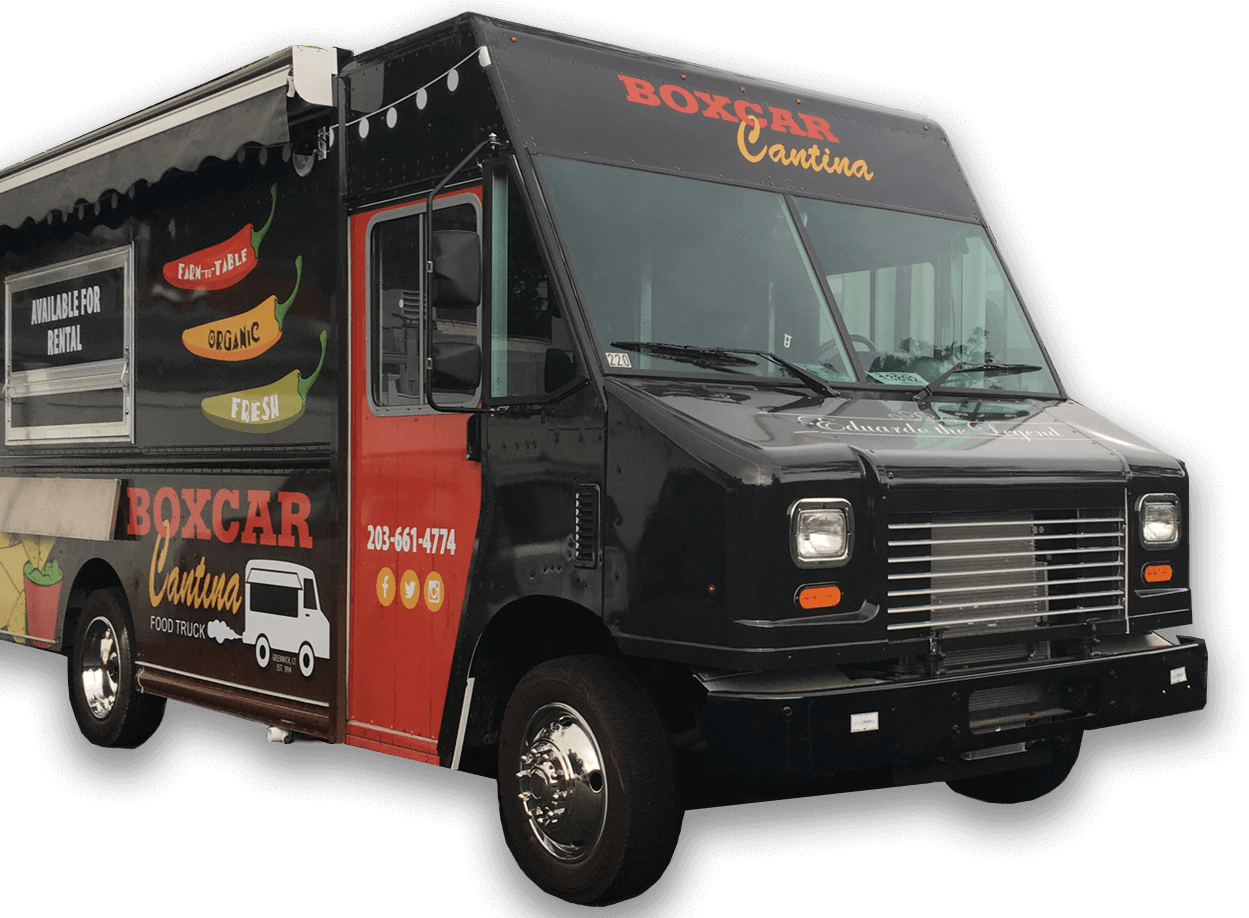

A trailer puts more of your budget into the kitchen instead of an engine and drivetrain. You tow it with your own vehicle, unhitch it at a pod, brewery or event, and leave it set up for as long as you need. Reasons owners pick a trailer:
Most trailer builds take 5 to 7 weeks once the layout and equipment list are approved. Here is how your trailer moves from an idea to something you can hitch up and tow away.
1. Menu & Layout Planning
We start from your menu and service style, then place every appliance, sink and window on a scaled floor plan.
2. Frame, Shell & Fabrication
Your trailer is built on a frame and axles sized for the finished weight of your kitchen equipment.
3. Plumbing, Power & Inspection
We install the water, propane and electrical systems, then prepare the trailer for health and L&I inspections.
4. Pickup & Towing Walkthrough
Before you leave, we go over hitching, brakes, leveling and setup so your first service goes smoothly.
8.5' x 10'–12'
Coffee, shaved ice, kettle corn and other short menus run by one or two people.
8.5' x 14'–16'
The most popular range for tacos, burgers and BBQ, with room for two or three staff.
8.5' x 18'–20'
Space for pizza ovens, longer hood lines and a crew of three to four.
8.5' x 24' and Custom Lengths
Catering kitchens, BBQ trailers with a rear smoker porch, or any length that fits your equipment, lot or event space.
Most food trailers are 8.5 feet wide, the widest a trailer can be without an oversize permit. Length is what changes, and it depends on your equipment, your crew and where you plan to park.
A finished food trailer weighs far more than an empty cargo trailer once the equipment, water tanks and propane are on board. Check your vehicle against these basics before you settle on a size. Keeping the trailer at or under 10,000 lbs GVWR generally avoids the need for a Class A commercial license, but rules vary by state.
Tow Rating, Payload & GCWR
Your vehicle's towing capacity, payload and gross combined weight rating all need to cover the loaded trailer.
The Right Truck
Smaller trailers are often pulled with a half-ton pickup, while most 16–20 foot kitchens need a 3/4-ton or 1-ton truck.
Hitch & Tongue Weight
Plan for about 10–15% of the loaded trailer's weight on the hitch, and use a ball and receiver rated above that load.
Brakes & Breakaway
Electric brakes, an in-cab brake controller and a breakaway system. Washington requires brakes and breakaway on trailers over 3,000 lbs.
We build every common type of food trailer, plus one-off concepts. Each one is laid out around the equipment your menu needs, from a single espresso machine to a full commercial hood line.
.jpg)
Compact layouts with espresso machines, grinders, refrigeration and filtered water, often with a walk-up window on each side.
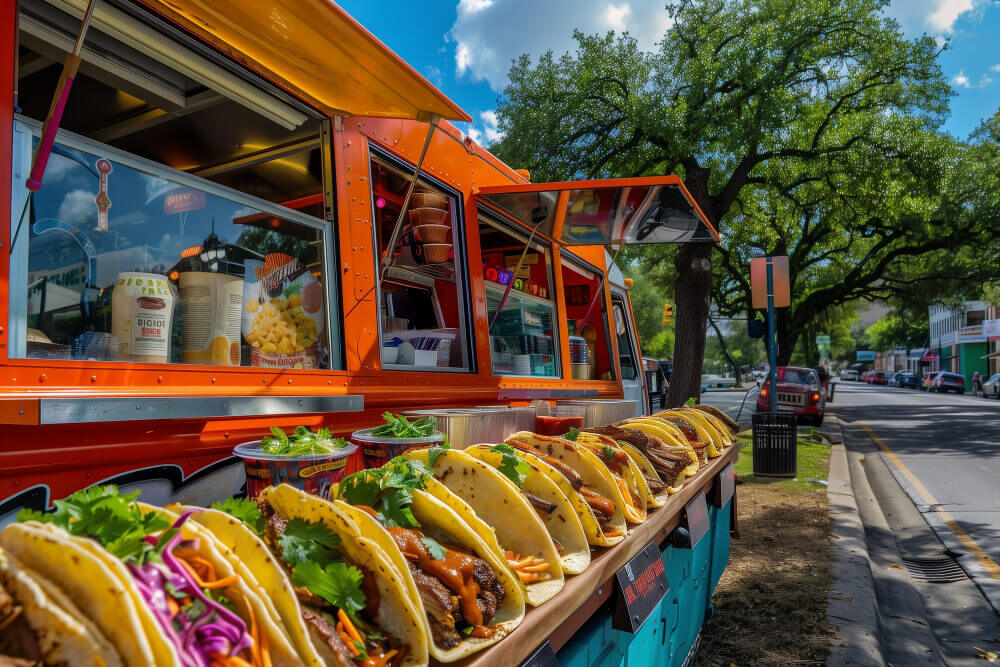
Kitchen trailers with an optional rear porch for an offset or pellet smoker, plus holding cabinets, prep space and a service window.

Freezers, dipping cabinets, soft-serve machines and blenders for ice cream, shaved ice, smoothies and baked treats.

Catering kitchens for weddings, corporate events and private parties, with extra prep space, holding equipment and room for a larger crew.

Built around a wood-fired, gas or conveyor oven, with heat shielding, dough prep tables and cold storage for toppings.

Fryers, flat tops and warmers for fair and festival food, plus taco, kettle corn, beverage and bar trailers. If your concept is unusual, we will design it from scratch. Book a free trailer estimate.
Every trailer is built at our Clackamas, Oregon shop. We know the plan review steps in Oregon and Washington, submit Washington L&I plans ourselves as an approved manufacturer, and also build for owners in Texas, Utah, California and North Carolina. Areas we serve include:

You don't have to pay for your trailer all at once. Financing is available for qualified buyers, and we can walk you through the options while we plan your build.
ask about financing
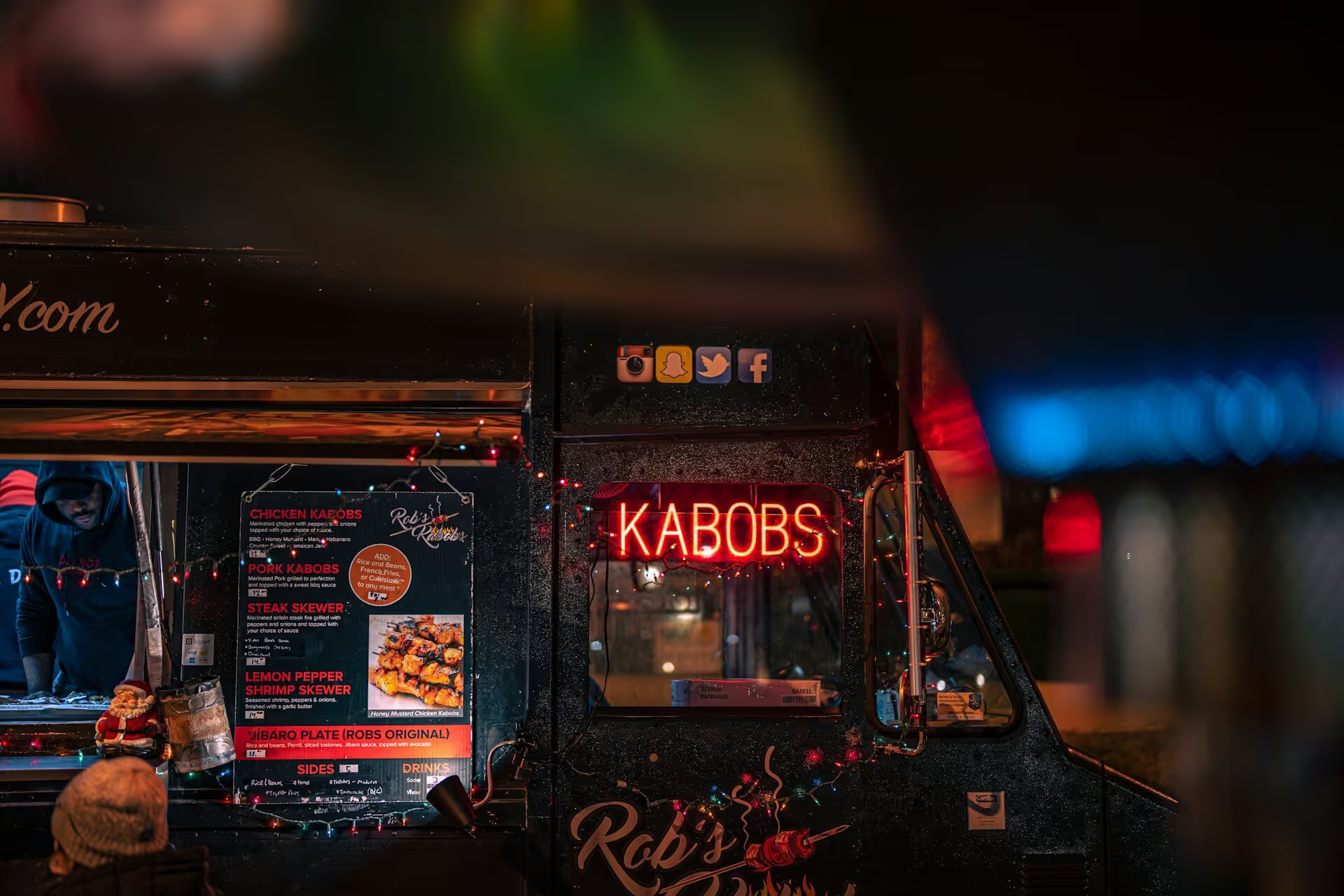
We have been building mobile kitchens in Clackamas for 13 years, with more than 150 trucks and trailers delivered. Every trailer is designed around your menu, built with commercial-grade equipment and checked against the code requirements in your area. You work directly with the people building your trailer, get clear updates as the build moves along, and know exactly what to expect at pickup. If something needs attention later, our workmanship and trailer warranties have you covered.
about usReviews from owners who built with us.
Solid experience, professional interaction, good follow through, they did everything they said they were going to do and completed the project on time...


Dave and his crew do great work, I'm extremely pleased with how they transformed my cart and am going back to purchase a truck so they do the same job if not, I highly recommend their work. Thanks, I appreciate you guys...
I just completed a 6-month long project with this amazing team, and I couldn’t be happier. From day one, they’ve been incredibly patient, responsive to every call and text, and always willing to go the extra mile to help whenever I needed it...
I had great service here for my food truck, when it needed fixing. Great communication and good quality work...


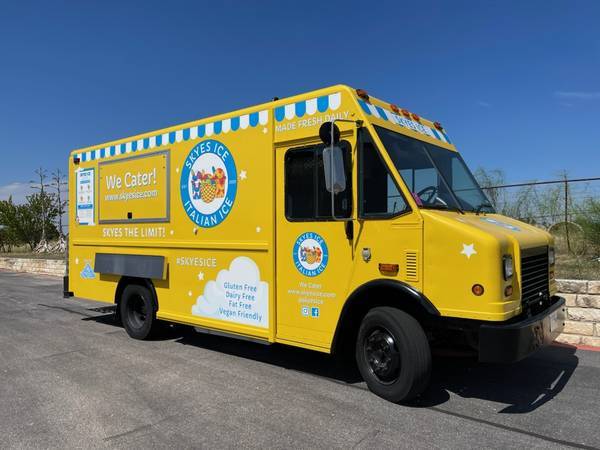
A look at trailers we have finished for owners in Oregon, Washington and beyond. More build photos are on our work page.
Our Work Page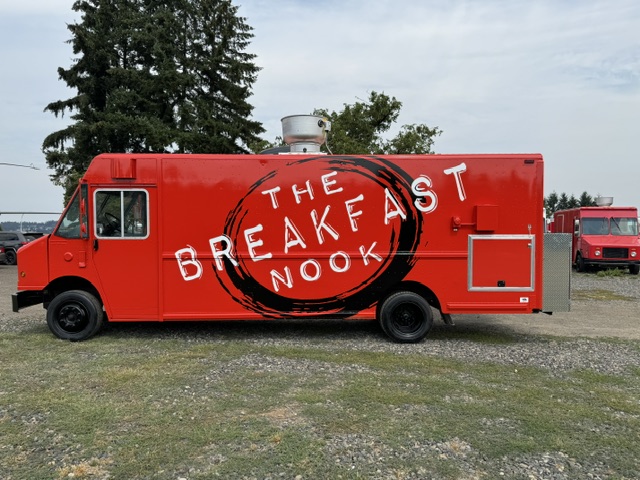


Answers to the questions we hear most from owners planning their first trailer.
How long does it take to build a custom food trailer?
Most builds take 5 to 7 weeks after the layout and equipment list are approved. Large catering kitchens or trailers with specialty ovens can take longer.
What size food trailer do I need?
It depends on your menu, your crew and where you will park. Most single-concept menus fit in 12 to 16 feet, and we confirm the size with you during layout planning.
Can my truck tow a food trailer?
Check the towing capacity, payload and GCWR in your owner's manual against the loaded weight of the trailer you want. If you are unsure, send us your vehicle details and we will help you match a trailer size to it.
Will my trailer pass the health inspection?
We build to the health code where you will operate and prepare the plans your county asks for. Final approval comes from your local health department at inspection.