OPEN 9:00 AM - 6:00 PM

503-757-8301
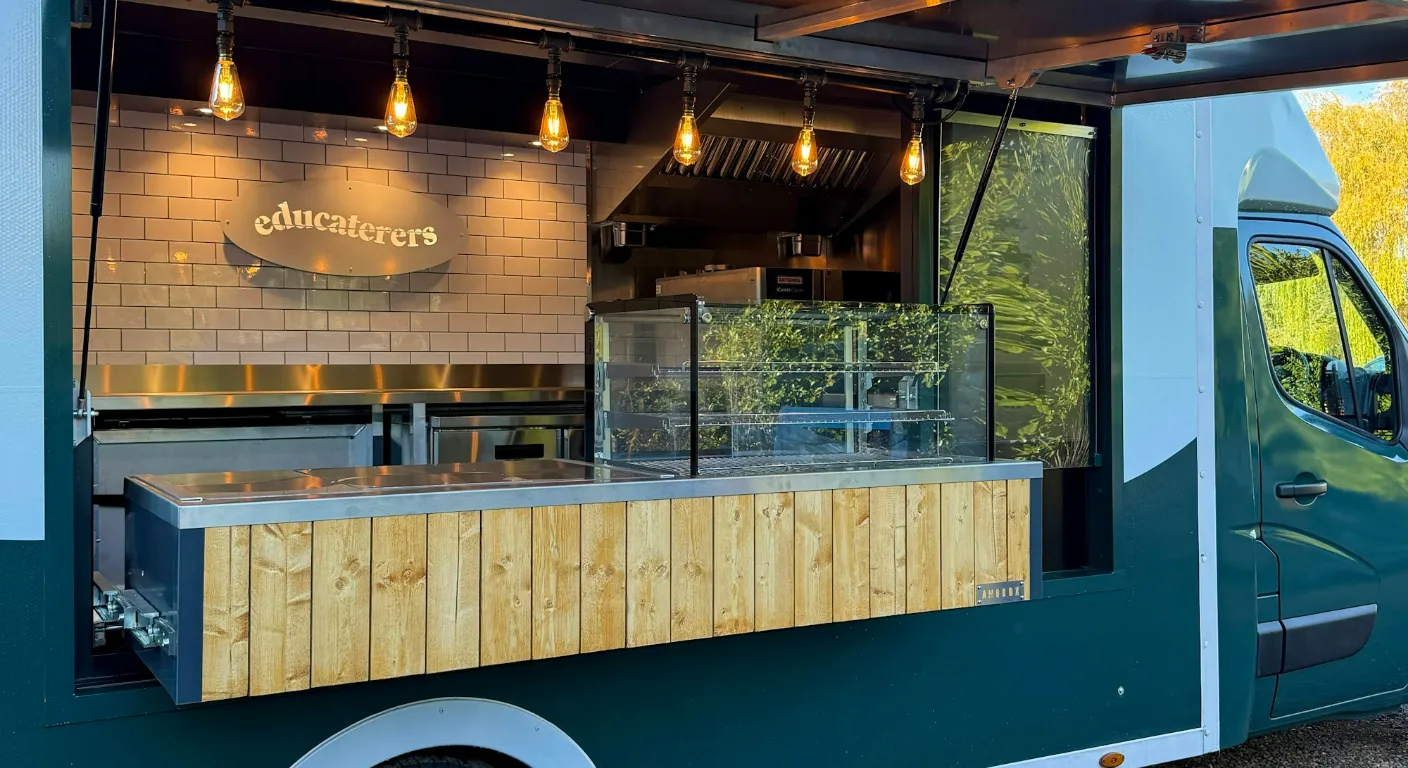
Good food truck design starts long before anyone picks a wrap color. The layout decides how fast your crew can serve, whether the truck passes inspection and how safely it handles on the road. Here is how we plan the inside of a truck around the menu, from equipment placement to water tanks and power.
Write down every item you plan to sell and every step it takes to make it: cold storage, prep, cooking, holding and handing it out the window. Those steps become your workflow, and the best layouts let food move in one direction without the crew crossing paths.
Keep hot and cold zones apart so the refrigeration is not fighting the heat from the fryer, and leave an aisle of about three feet so two people can pass each other during a rush. The order window should sit at the finishing end of the line, where plated food is ready to go.
Most trucks use a galley layout, with equipment along one or both walls. Because trucks usually park with the passenger side facing the sidewalk, the service window and pass-through counter typically go on that side, with the cook line behind or beside it.
Burgers and BBQ: a hood line with a flat-top, fryer and charbroiler on one wall, and cold prep with a sandwich unit across from it. Many BBQ owners add a smoker on a rear porch or tow it separately, so the smoke and heat stay out of the kitchen.
Coffee: the espresso machine and grinders sit at the window, with milk fridges underneath and plenty of counter space. Coffee trucks can stay compact, often 12 to 16 feet, and usually skip the hood because nothing on the menu produces grease.
Pizza: the oven sets the layout. A deck or wood-fired oven needs heat shielding, clearance and careful weight planning, plus a long prep table for stretching dough. Expect at least 16 feet.
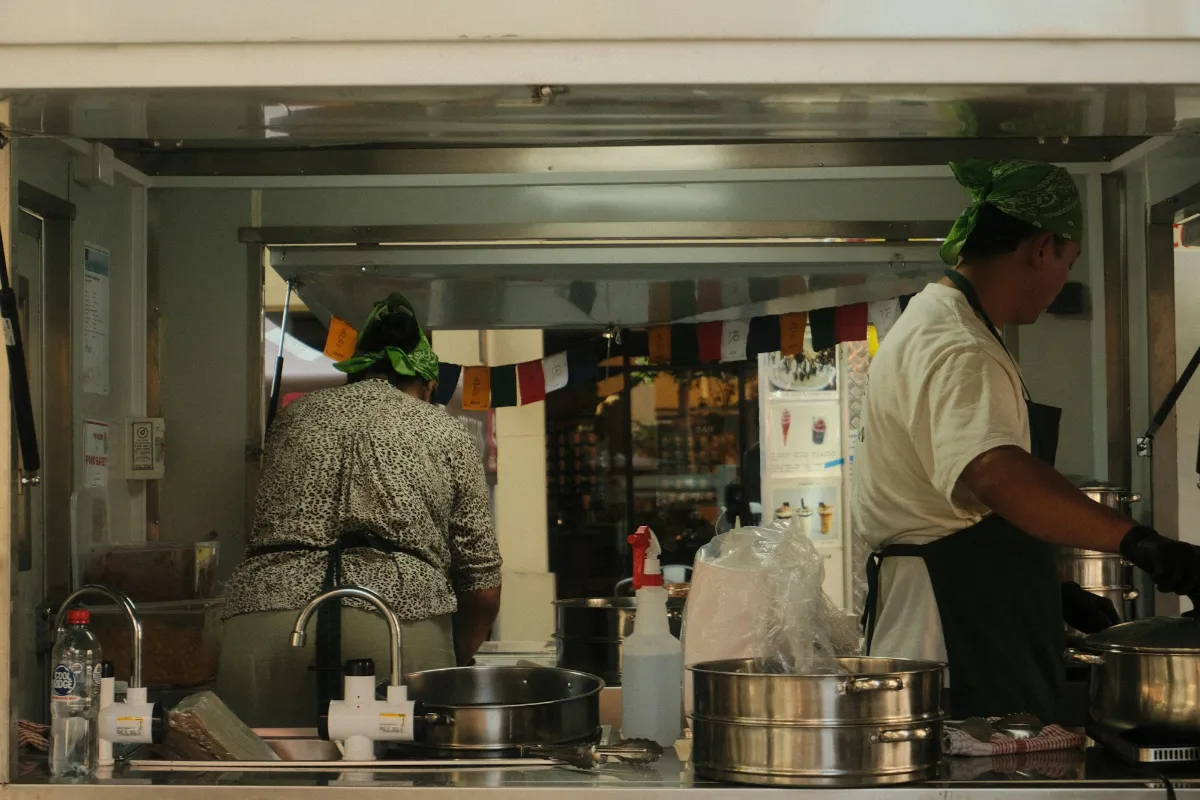
Tacos and dessert: a taco truck needs a griddle, a steam table and plenty of cold storage for toppings. Dessert and ice cream trucks trade cooking equipment for freezers, dipping cabinets and a wider service window.
The same design rules apply to both, but a trailer gives you more usable floor space for the money, since no cab or engine takes up room. A trailer can also stay parked on site for multi-day events while the tow vehicle leaves.
A truck makes more sense when you move every day: it parks in one spot, sets up faster and does not need a separate tow vehicle. In a trailer, weight balance matters even more, so heavy items like water tanks and generators are placed over or just ahead of the axles.
Still deciding between the two? Our food truck vs. food trailer comparison covers cost, mobility and resale, and our work page shows finished builds of both.
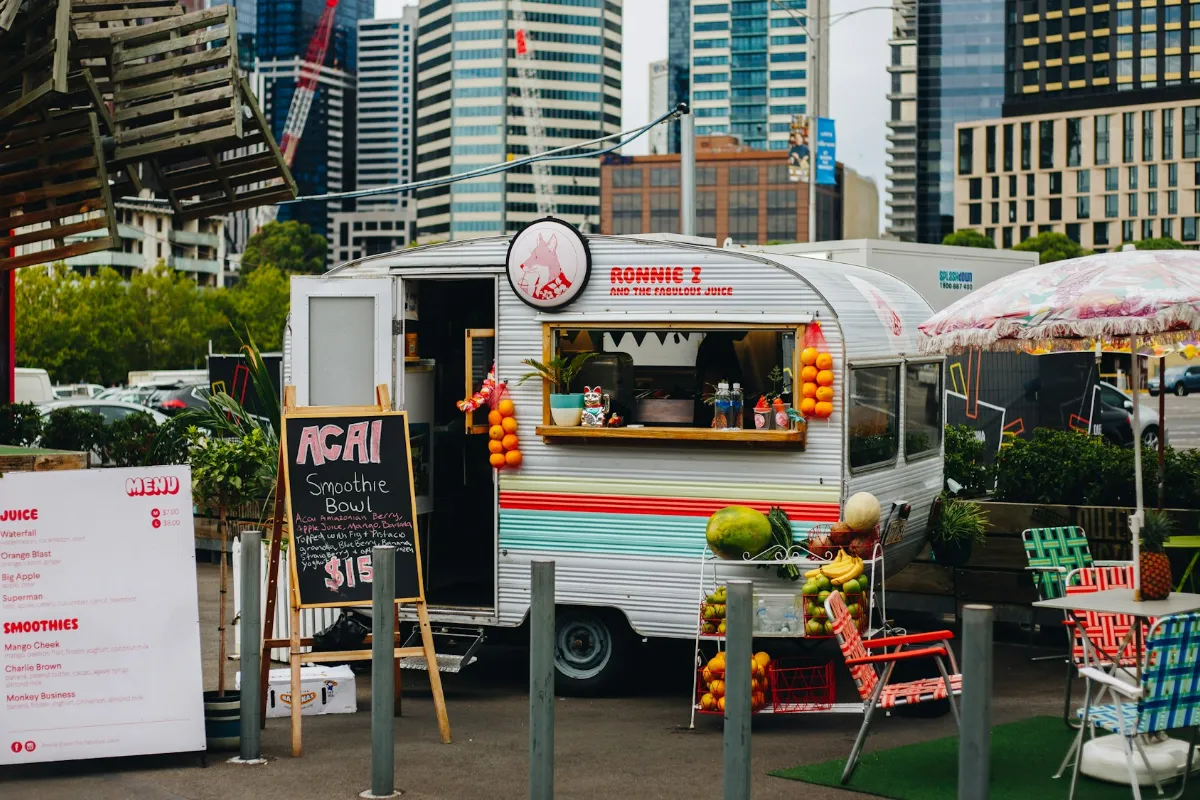
Any grease-producing equipment, such as a fryer, griddle or charbroiler, needs a commercial hood with an automatic fire suppression system above it. Keep open flames away from the fryer, and plan for a K-class extinguisher near the cooking line plus an ABC extinguisher elsewhere in the truck.
Choose commercial equipment certified for food service (NSF or equivalent) and secure it so nothing shifts while you drive. Fridges, freezers and the hood fan all draw power, so lock in the final equipment list before the electrical system and generator are sized.
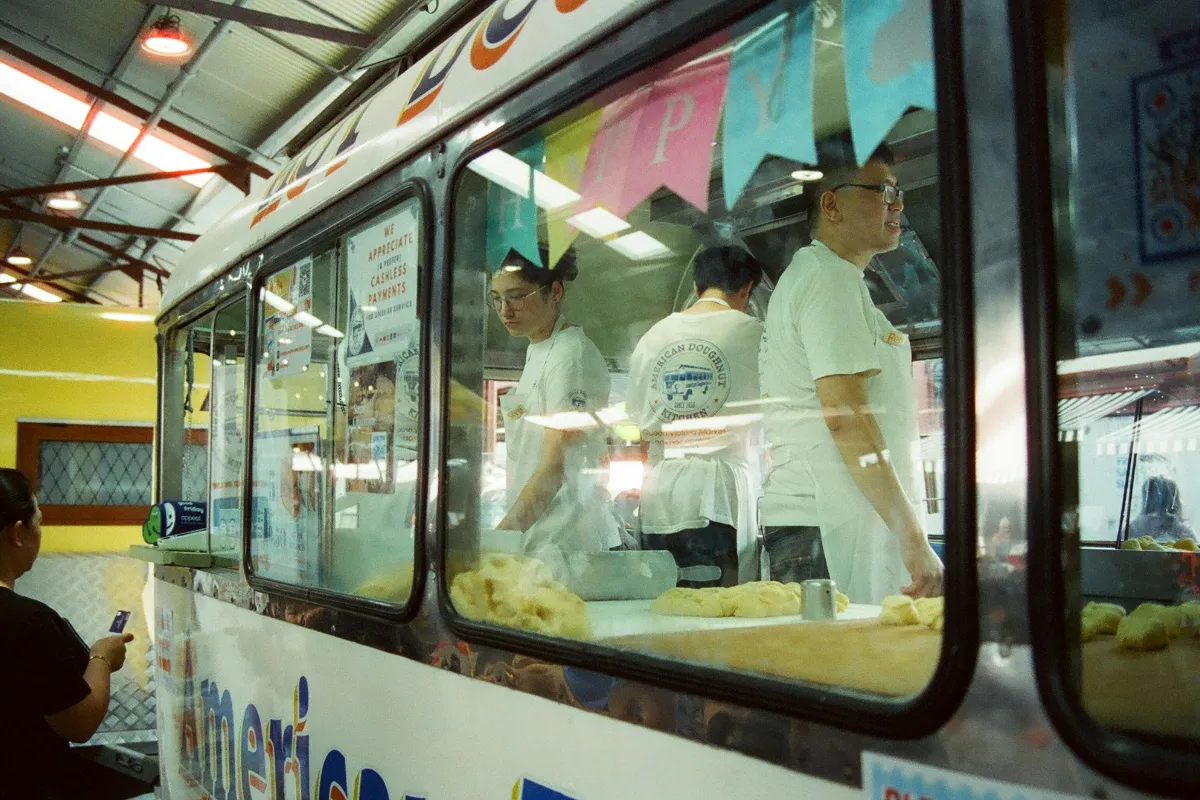
Health codes require a dedicated handwashing sink and a three-compartment sink for dishes, along with fresh and waste water tanks. In the Washington and Oregon counties we serve, the waste tank usually has to be at least 15 percent larger than the fresh tank, so check your county's numbers early.
Add up the wattage of every appliance to size the generator, and leave headroom for the startup surge from compressors. Propane tanks mount outside the kitchen in a vented area. Finally, spread heavy equipment across the chassis so the truck stays within its weight rating and handles safely.
For most menus, a galley layout with a straight-line workflow works best: cold storage and prep at one end, cooking in the middle under the hood, and the service window at the finishing end. The right version depends on what you cook and how many people work inside.
Coffee and dessert trucks can work in 12 to 16 feet. Full cook lines with a hood, fryer and grill usually need 16 feet or more. Start with your equipment list and the number of people working inside, then choose the length.
Yes. Most county health departments review the floor plan, equipment list and plumbing before the truck can operate. In Washington, food trucks also need approval from the Department of Labor & Industries. Getting plans reviewed first prevents costly changes later.
Have a menu in mind? Share it with Custom Food Trucks LLC, and we will help you plan a layout that fits your kitchen, your crew and your local codes, along with a free estimate for the build.
Published by Custom Food Trucks LLC | Published: October 20, 2026 | Last updated: October 20, 2026 | Custom Food Trucks LLC, 14976 SE 172nd Ave, Clackamas, OR 97015